
Victoria Co-operative Fisheries Limited
 247 New Haven Road, New Haven, Nova Scotia, Canada, B0C1N0
 +1-902-285-0009
 Osborne Burke

Victoria Co-operative Fisheries (VCF) is a locally harvester owned and operated co-operative located in Northern Cape Breton. Our co-operative is community focused and has been in operation for 70 years. We are both a buyer and a processor of primarily lobster and snow crab; we also handle halibut, other groundfish and occasionally jonah crab. Our focus is on quality and our operations are both MSC and BRC certified.
We currently ship all over the world including South Korea, Japan, China, Hong Kong, USA, Canada, Taiwan, etc.
 Print this page
 Business Type
 Export Markets:
Belgium, Canada, China, Hong Kong, Italy, Japan, Netherlands, Singapore, South Korea, Spain, Thailand, United Kingdom, United States, Vietnam
Ocean Pride Fisheries Limited
136 Jacquard Rd., Lower Wedgeport, Nova Scotia, Canada, B0W 2B0
+1-902-663-4579
Jules LeBlanc
Ocean Pride Fisheries is a vertically integrated company. We are a license holder of sea cucumber quota for fishing areas on the Scotian Shelf. We process upwards of 3000 metric tonnes of live sea cucumber each year, producing and selling goods in all forms: frozen & dry; meat/skin/split/whole. These products are sold domestically to Asian diaspora and exported mainly to Hong Kong and Mainland China.
We also use byproducts of the seafood processing line to make pet food and nutraceuticals/dietary supplements.
Print this page
Business Type
Export Markets:
Canada, China, Hong Kong, South Korea, United States, Vietnam
Ship's Lobster Pound (2005) Limited
6649 Highway 3, Woods Harbour, Nova Scotia, Canada, B0W 2E0
+1-902-723-2525
Jordan Nickerson
Ship’s Lobster Pound (2005) Limited has been in the business of buying and selling lobsters since 1988. Started by three brothers – Kirk, Gregory and Joel Nickerson, the company is still family owned and operated. For decades, our family-owned business has been built on a legacy of quality, sustainability, and a deep-rooted connection to the sea.
Our lobsters are sourced from many ports in the region. They are purchased straight from the fishing boats as they come in with their catch.
Print this page
Business Type
Export Markets:
Canada, China, France, Hong Kong, Italy, Japan, Netherlands, Spain, United States
How To Shell & Eat Nova Scotia Lobster
Harvesting lobster along the rugged Atlantic Coast is steeped in tradition. Prized for its hard shelled and full meat qualities, Nova Scotia Lobster is harvested from the cold, clean, pristine waters along the coast of the province, by thousands of independent harvesters, and shipped all over the world.
Cracking a lobster? It's easier than you might think! We have outlined the steps for you here. Don’t forget your seafood bib!
1. TWIST THE TAIL
To remove the tail, grasp the lobster around the body with one hand and the tail with the other and gently twist. Pull apart the two pieces. You may notice a green substance on the meat which is called the tomalley. There may also be a red substance known as the roe (eggs) found in some female lobster. Both are edible and considered by many to be one of their favorite parts, however they can be scraped off if desired.
2. TWIST THE CLAWS
To remove the claws, simply grab the body with one hand and gently twist the claws and knuckle with the other hand. Both claws and knuckles will separate easily from the body. Use care when holding the knuckle, since it has sharp protrusions that can hurt if not handled carefully
3. CUT OR CRACK THE TAIL OPEN
To remove the meat from the tail, squeeze both sides together until you hear (feel) the shell crack. Grab each side of the tail with a hand and open like a book. The meat can now be easily removed.
4. CUT OR CRACK THE CLAWS OPEN
Crack the claws open with a heavy and sharp knife, or use a lobster cracker (like a nut cracker). Simply bend the claws after it is cracked and the meat can easily be extracted. You can also use the cracker to break the knuckle shell. Don’t forget to remove the meat found in the small part of the lower claws… you will want to get every tasty morsel.
5. DON’T FORGET THE LEGS AND BODY!
The legs and the body also contain edible meat. Break and open the legs at the joint and use a fork or skewer to draw out the slender pieces of meat contained inside. For the body, simply pull apart the shell to expose the meat around the body. Remember, all of the lobster aside from the part located behind the eyes is edible and the choice is up to you on how much you wish to eat.
How To Cook Nova Scotia Lobster
Cooking lobster is easier than you might think. The first two basic things that you need are a large pot and water. Some people use only seawater to cook lobsters but if you can't get it, add plenty salt to fresh water – it's important step to keep the sweet flavour of the lobster meat!
We've outlined a few tips for you to prepare Nova Scotia Seafood at home. Read on to learn how!

LOBSTER COOKING INSTRUCTIONS
Boiling and steaming are the most popular and traditional ways to cook live lobster and the method of choice if you want to serve a whole lobster. Boiling is a little quicker and easier to time precisely, and the meat comes out of the shell more readily than when steamed. For recipes that call for fully cooked and picked lobster meat, boiling is the best approach.
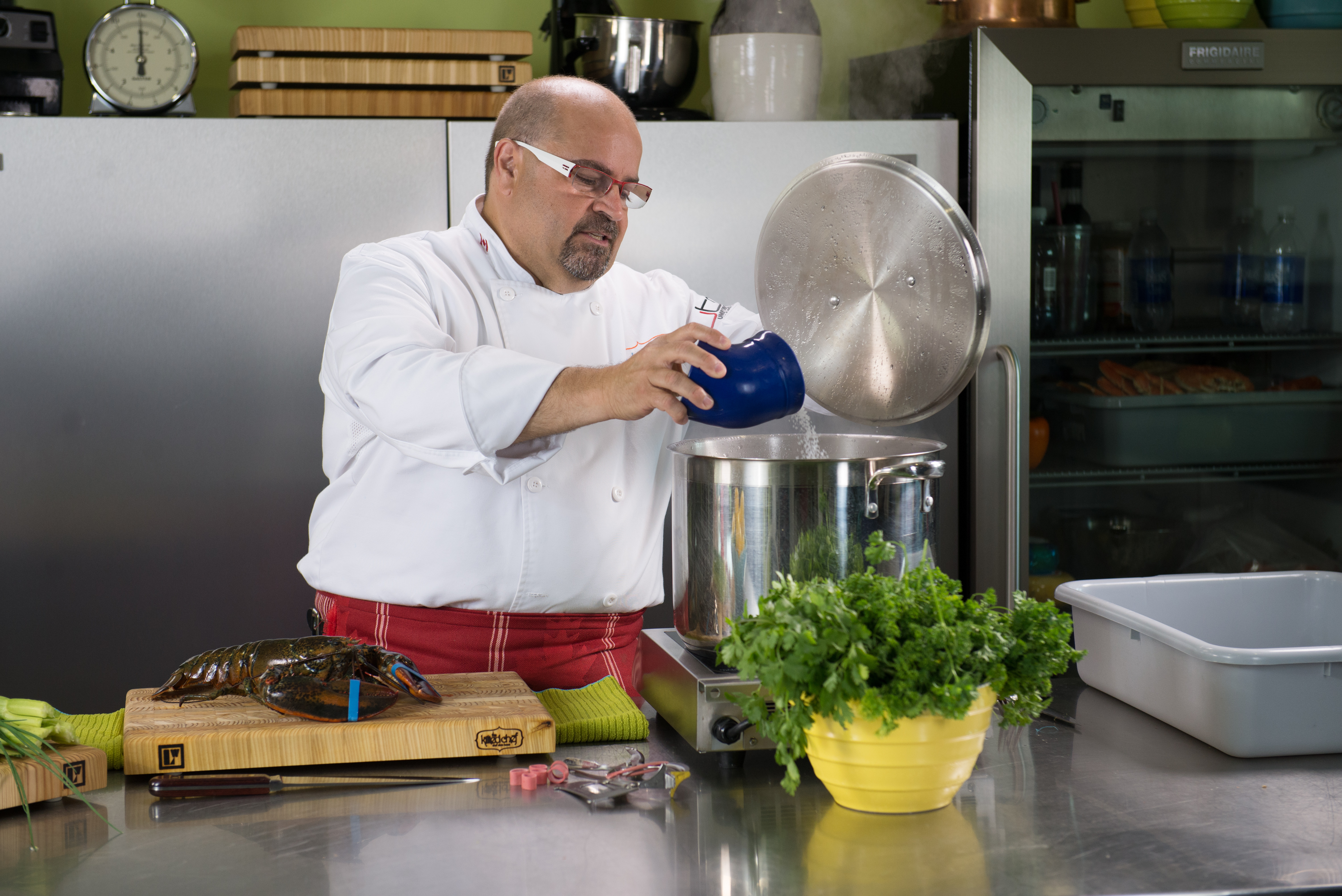
In contrast, steaming is gentler, yielding a slightly more tender meat. It preserves a little more flavor and it’s more forgiving on the timing front. It’s harder to overcook a steamed lobster. When partially cooked lobster meat is needed for a dish, parboiling is the perfect option. Parboiling, or blanching, cooks the lobster just enough so that the meat can be removed from the shell, then chill the meat and reuse it later in a dish that calls for further cooking.
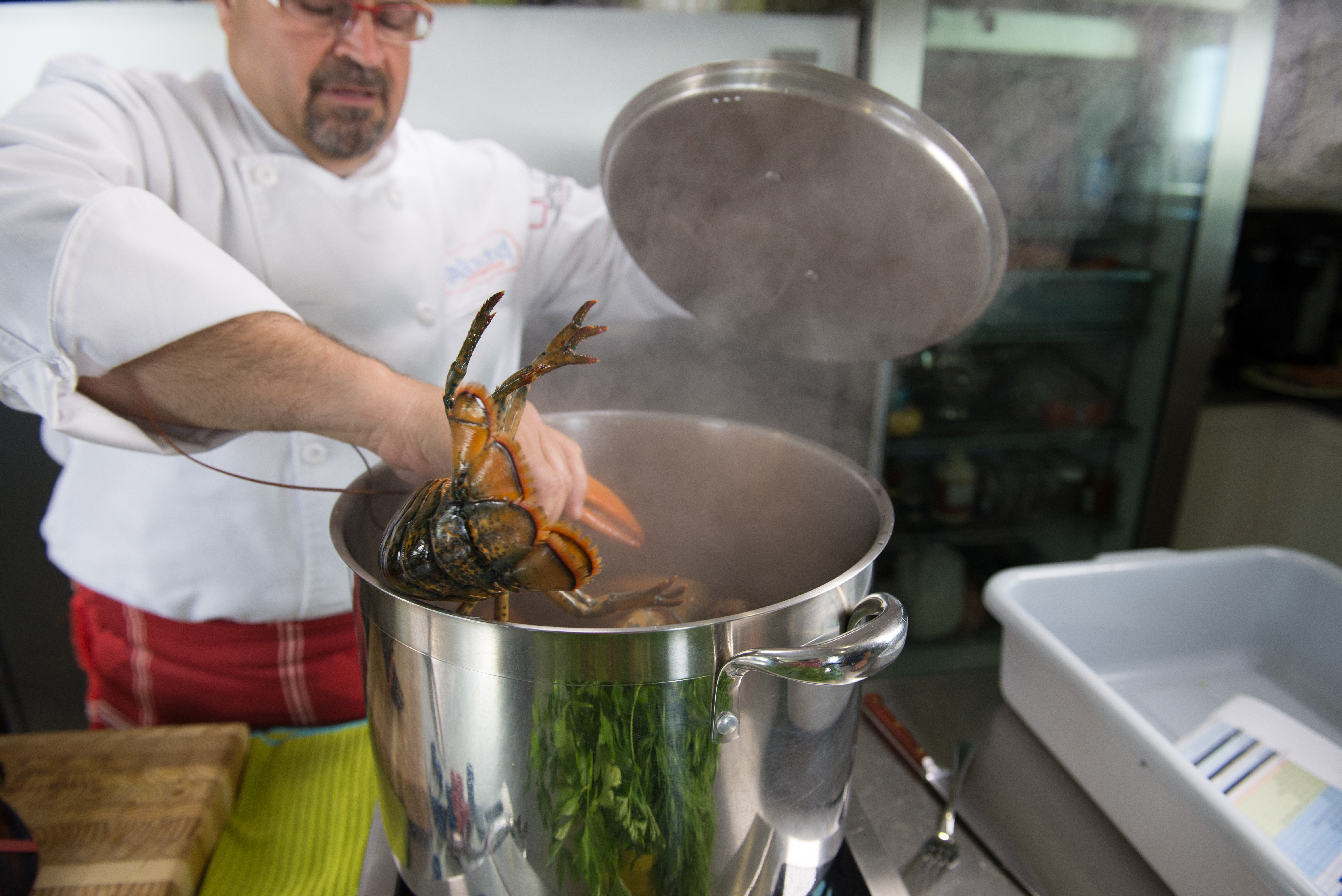
COOKING TIMES
The suggested guidelines below are appropriate when cooking one lobster at a time or several lobsters of the same size. For timing, use the weight of individual lobsters, not total weight of all lobsters being cooked.
WEIGHT: BOIL:
| 1 pound | 8 – 10 minutes |
| 1 ¼ pounds | 9 – 11 minutes |
| 1 ½ pounds | 11 – 12 minutes |
| 1 ¾ pounds | 12 – 13 minutes |
| 2 pounds | 15 minutes |
| 2 ½ pounds | 20 minutes |
| 3 pounds | 25 minutes |
| 5 pounds | 35 – 40 minutes |

And just like that, you're done! You've successfully cooked your own succulent Nova Scotia lobster. More of a visual learner? Check out our video tutorial with chef Andrew Farrell below!
James L. Mood Fisheries Ltd.
130 Falls Point Road, Woods Harbour, Nova Scotia, Canada, B0W 2E0
+1-902-307-4182
Graydon Mood
Print this page
Business Type
Export Markets:
Canada, China, France, Germany, Hong Kong, Italy, Japan, Netherlands, Singapore, Spain, Thailand
Gidney Fisheries
136 Dakin Park Road, Centreville, Nova Scotia, Canada, B0V 1A0
+1 902-247-1556
Tara Irwin
High Pressure Processed RAW Frozen North Atlantic Lobster Processing Facility in business for over 125 years.
Print this page
Business Type
Export Markets:
Belgium, China, France, Germany, Hong Kong, Italy, Japan, New Zealand, Portugal, Singapore, South Korea
World Link Food Distributors Inc.
209 Aerotech Drive, Unit 10-12B, Goffs, Nova Scotia, Canada, B2T 1K3
+1-902-423-0787 ext. 106
Kelly Zhuang
World Link Food Distributors ships over 8 million pounds of live lobster to 24 countries in North America, Europe and Asia from 3 processing facilities in South Nova Scotia and 1 processing unit in Prince Edward Island.
We distribute frozen and fresh seafood products from Atlantic Canada to our valued customers using the most efficient logistic routes possible.
World Link Food Distributors Inc were awarded a spot on the 2017 PROFIT 500 ranking of Canada’s fastest growing companies.
Print this page
Business Type
Export Markets:
Belgium, Canada, China, Denmark, France, Germany, Greece, Hong Kong, Italy, Japan, Netherlands, Saudi Arabia, Singapore, South Korea, Spain, Thailand, United Arab Emirates (UAE), United Kingdom, United States, Vietnam
Lobster Hub Inc.
45 John Thibodeau Road, Meteghan, Nova Scotia, Canada, B0W 2K0
+1-902-645-2950
Geoffrey Jobert
Lobster Hub is wholly owned by World Link Food Distributors Inc..
Our second-generation business is a dynamic blend of family and friends, united in their passion and professionalism. With a young and energetic team at its core, we embody a modern approach rooted in deep-seated family values. Always ready to assist, we strive to offer not just services, but lasting partnerships and reliable support. This unique combination of youthfulness, expertise, and a family-centric approach defines our way of doing business and building relationships.
Print this page
Business Type
Export Markets:
Australia, Belgium, Canada, China, Denmark, France, Germany, Greece, Hong Kong, Italy, Japan, Netherlands, New Zealand, Portugal, Saudi Arabia, Singapore, South Korea, Spain, Thailand, United Arab Emirates (UAE), United States, United Kingdom, Vietnam